
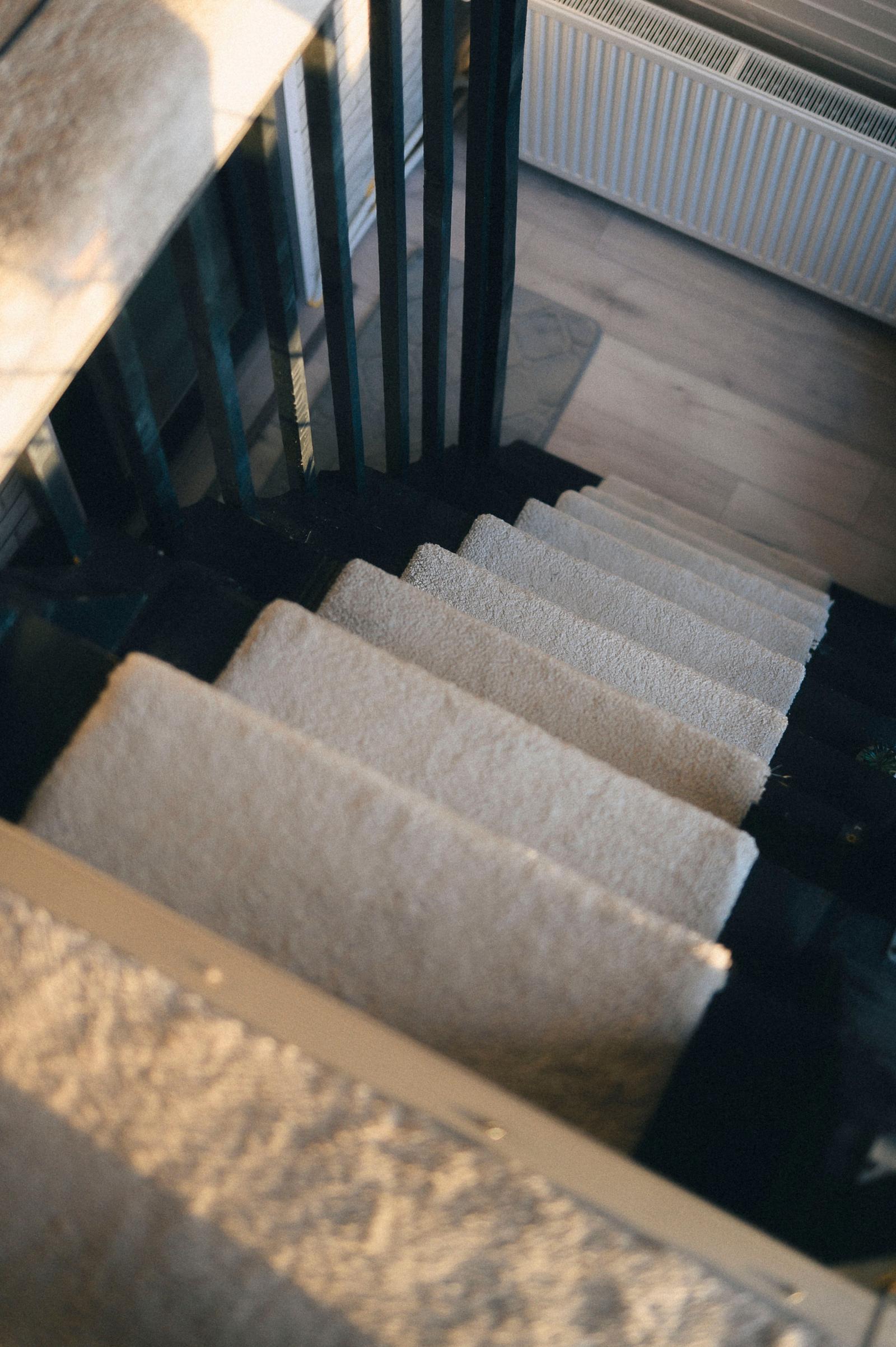
Stairs are the hardest-working carpet in a two-story home or townhouse, and they’re the place where a small problem can turn into a real fall. With the holidays coming to Fort Lauderdale, your stairs are about to carry grandparents, toddlers, guests carrying luggage and plates, and kids running up and down all day. If the carpet on a step has started to lift at the edge, feels loose underfoot, or has worn thin on the front lip, now is the time to deal with it. The good news is that loose stair carpet can often be repaired without replacing the whole staircase.
Here’s how to spot the warning signs, what you can safely do in the meantime, and when to call a carpet repair pro.
Why Stair Carpet Deserves Extra Attention
Fall-prevention checklists from the CDC and the American Academy of Orthopaedic Surgeons (AAOS) both call out loose or torn stair carpet as a hazard to fix. The CDC’s advice is simple: make sure the carpet is firmly attached to every step. AAOS says to repair loose stairway carpeting immediately.
A ripple in the middle of a bedroom is a nuisance. The same looseness on a staircase is different, because a missed step on stairs has much more serious consequences. That’s especially true for older relatives and young children visiting for the holidays.
Why Stair Carpet Comes Loose and Wears Out
The Front Edge Takes Most of the Wear
Every footstep pivots over the front edge of the step, called the nosing. That narrow strip gets far more friction than the rest of the tread, so it’s usually where carpet wears thin or starts pulling loose first.
Loose Backing and Lost Tension
Carpet can lose tension over time from normal wear, heavy foot traffic, and pets playing on the stairs. In South Florida’s humid climate, the layers of carpet backing can absorb moisture and relax. That’s one reason carpet that was snug on installation day can feel loose years later.
Pets and Daily Traffic
Dogs and cats love to dig and scratch at stair edges and corners, and pulled fibers there can spread. Catching it early makes pet-damaged carpet repair simpler. Busy households, rentals, and homes with lots of guests put the stairs through even more.
Warning Signs to Look For on Every Step
Walk your staircase slowly, top to bottom, in good light. Look and feel for:
- Carpet lifting or pulling away at the front edge of a step
- Bald or thinning spots on the nosing, ahead of the rest of the tread
- Carpet that shifts or slides when you step on it
- Bumps, bubbles, or wrinkles on a tread or riser
- Loose seams, rips, or snags, especially on Berber or loop-pile carpet
- Pet damage such as chewed edges or pulled loops at corners
If you find any of these, treat that step as a priority repair, not a cosmetic one.
What You Can Do Safely Until It’s Repaired
- Clear the stairs completely. Shoes, bags, and decorations don’t belong on steps, especially during the holidays.
- Brighten the lighting. Make sure there’s enough light to see each step and both landings.
- Use the handrail, and remind guests to use it too.
- Remove loose throw rugs at the top or bottom of the stairs.
- Don’t pull loose fibers or trim snags. On Berber carpet, pulling a loop can turn into a long run.
- Skip the DIY re-tacking if you aren’t sure what’s under the carpet. A misplaced staple or tack can create a new hazard.
How a Professional Fixes Stair Carpet
Every staircase is different, and the right fix depends on what’s causing the problem. A technician will start by examining each step to find where the carpet has lost tension or is damaged. Depending on what they find, the fix may include:
- Re-tensioning and re-securing loose carpet so it sits tight on every tread and riser
- Seam repair where sections have separated
- Patching small holes, burns, or pet damage
- Berber repair to stop loops from running further
Proper re-stretching is done with the right tools. Our Fort Lauderdale technicians use a power stretcher for carpet stretching on the flat areas, because a knee kicker alone can’t render carpet flat and tight. That matters if you have a landing or upstairs hallway that has also started to ripple.
Repair vs. Replace: When Fixing Makes Sense
Repairing usually makes sense when:
- The problem is limited to a few steps or a landing
- The rest of the carpet still looks and feels good
- The backing is still solid
If the carpet is worn thin across most of the staircase, an honest inspection should tell you whether a repair is still worth it.
Timing Tip for the Holiday Season
If you’re hosting, schedule stair repairs early so the work is done well before guests arrive. If you’re also planning a carpet cleaning, we recommend having stretching and repairs done first, then cleaning. You can also bundle services to get the whole home ready at once.
Frequently Asked Questions
Can loose carpet on stairs be fixed without replacing it?
Often, yes. If the carpet and backing are still in good shape, loose stair carpet can usually be re-secured and repaired step by step.
Should stair carpet be repaired before or after carpet cleaning?
Before. We recommend stretching and repairs first, then cleaning. A quick vacuum before your appointment helps too.
Do I need to be home during the repair?
That’s up to you. Some homeowners stay home and others prefer to step out. If you stay, just give the technician room to work.
What areas do you serve?
We’re based in Fort Lauderdale and have completed carpet stretching and repair projects in Plantation, Sunrise, Weston, Pembroke Pines, Hollywood, Dania Beach, Wilton Manors, Pompano Beach, Lighthouse Point, Tamarac, and Parkland.
Make Your Stairs Safe Before Company Comes
Don’t let a loose step be the thing everyone remembers about this year’s gathering. Word of Mouth Carpet Restorations is a locally owned family business with over 20 years of experience, and our carpet repairs come with a Lifetime Labor Guarantee.
Call 954-724-0047, email info@womcleaning.com, or schedule your free estimate online.